Bridging the gap between off-site mentality and on-site delivery
We help Australian builders, developers and designers apply alternative construction methods - from concept to site.









Why the Old Model is Under Pressure
Traditional construction is on-site built, trade dependent, and reactive. It's the system most of the industry still defaults to and for good reason. It's familiar, flexible, and widely understood.
But the cracks are showing. Labour shortages, weather delays, drawn-out programmes, and unpredictable costs are making the traditional model harder to defend, especially as project demands increase and timelines tighten.
Off-site construction doesn't replace the way buildings are built. It shifts when and where the work happens; moving resolution earlier, into design and documentation, and fabrication into controlled environments. Less guesswork on site. More certainty in delivery.
That's the shift. That's the opportunity.
Less guesswork on site. More certainty in delivery.
That's the shift. That's the opportunity.
Building Smarter Starts Before Site
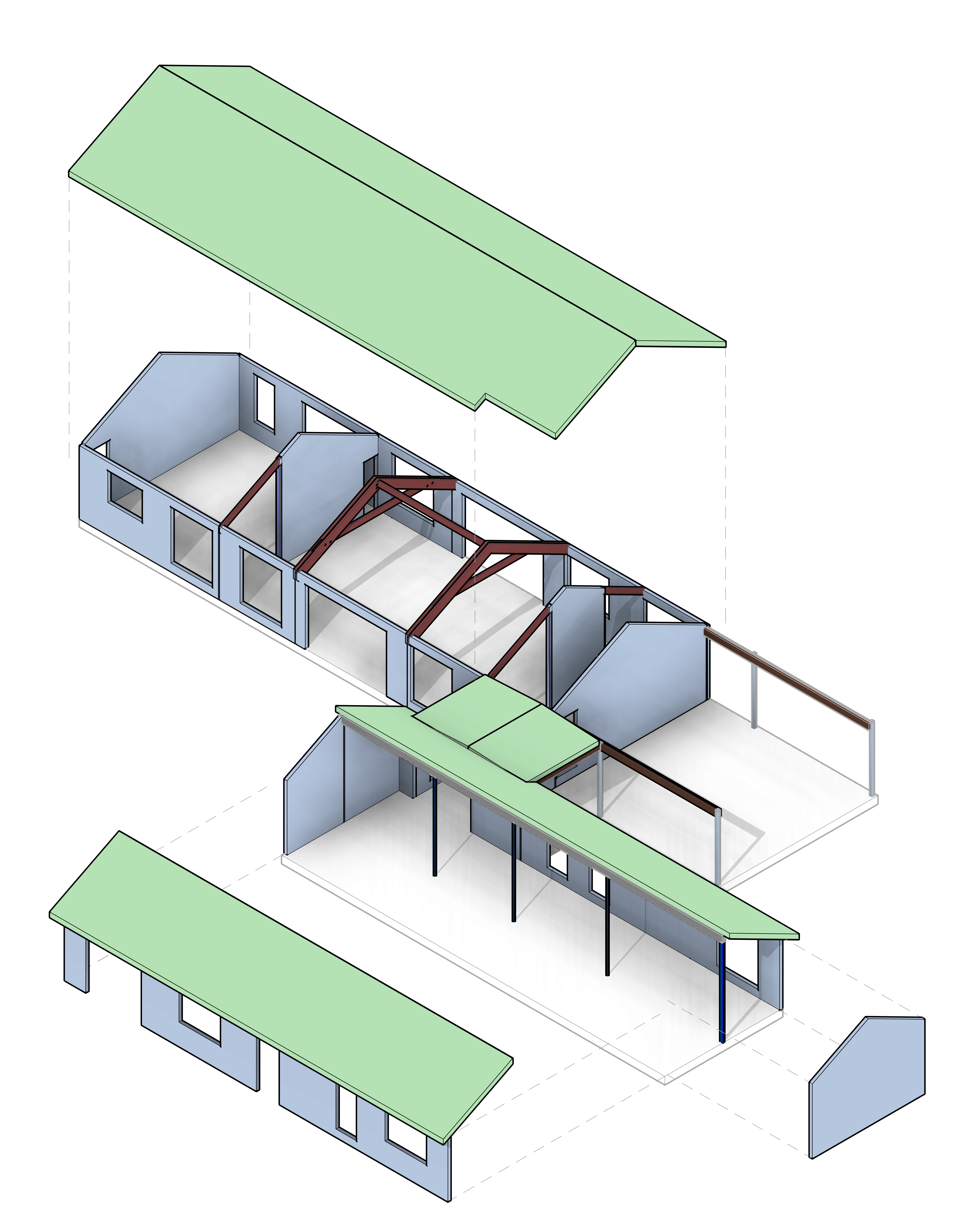
Off-site construction moves key building components from the site into a manufacturing environment. Structural elements - wall panels, floor systems, roof elements, or fully formed modules - are designed, fabricated, and in many cases partially assembled off-site, then transported and installed on-site.
Instead of coordinating individual materials and relying on sequential trades, projects are coordinated around finished building elements. Components arrive ready. The site becomes an assembly process, not a problem-solving one.
The result: faster programs, more consistent quality, reduced waste, and less exposure to the unpredictability of on-site construction.
Off-Site Isn't One System - It's a Strategy
The right approach depends on your project. Here's how the three main systems work - and where each one performs best.
Volumetric
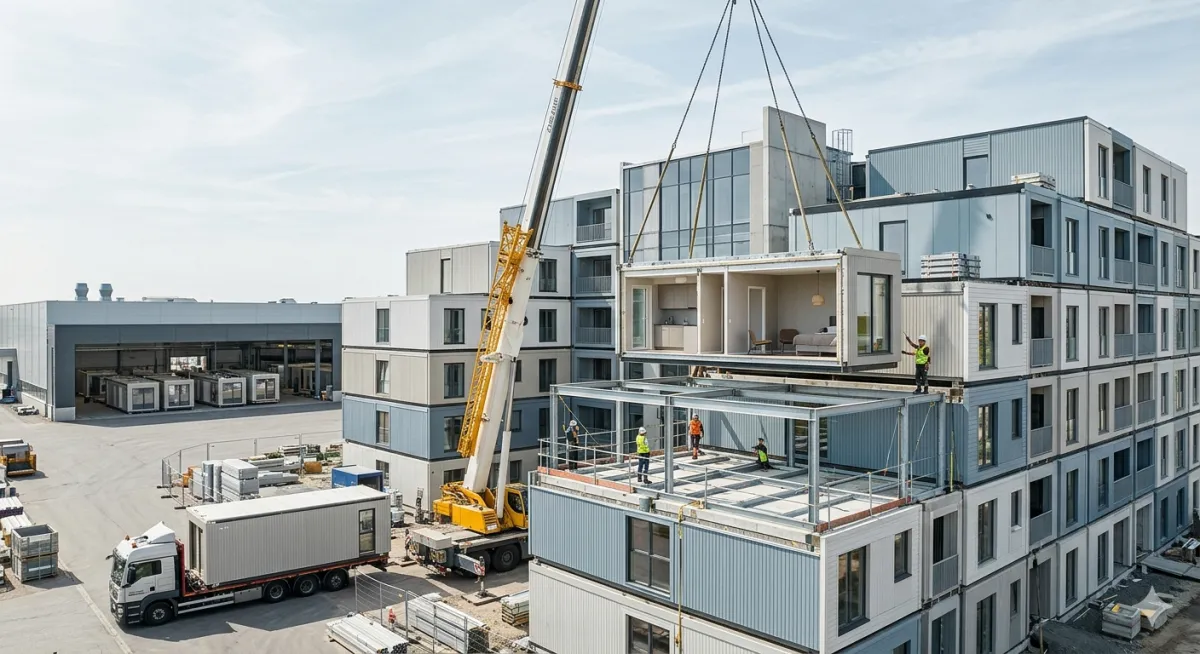
Fully formed three-dimensional modules built in a factory, transported to site, and craned into place. These modules arrive near complete, often including structure, linings, services, and finishes, before they leave the factory floor.
Best suited to repetitive building types with consistent layouts and tight delivery programmes. Apartments, mining camps, remote hospitals, remote accommodation, and modular housing are natural fits.
The trade-off is front-loaded design commitment as changes after fabrication begins are costly and typically unfeasible.
Panelised
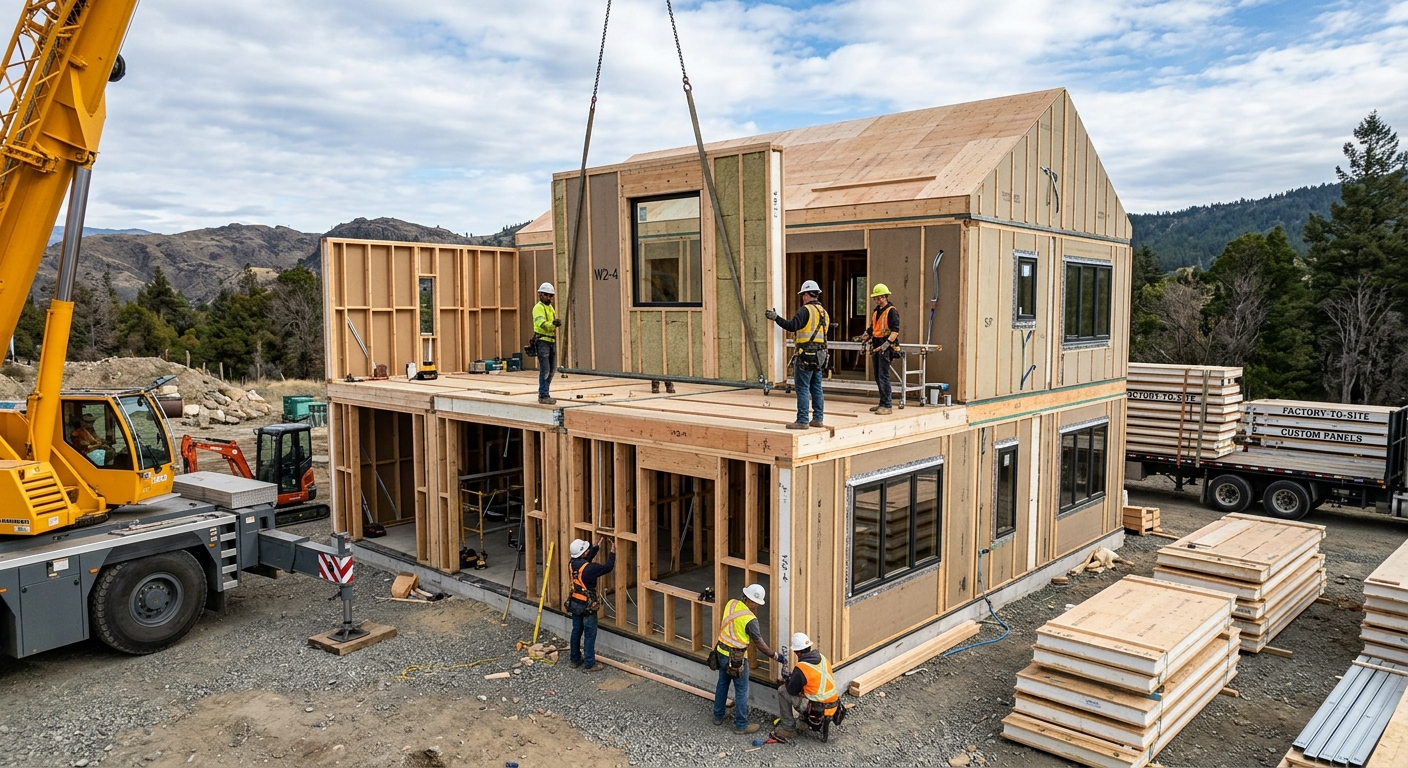
Flat wall, floor, and roof panels manufactured off-site and assembled on site to form the building. Panels can range from basic structural frames through to fully insulated, pre-finished systems with windows and services already integrated.
More adaptable than volumetric systems, panelised construction suits custom homes, architecturally driven projects, and builds where site conditions or design variation require flexibility. It still delivers the manufacturing benefits - controlled production, reduced waste, improved consistency - with more room to move during assembly.
Hybrid Systems
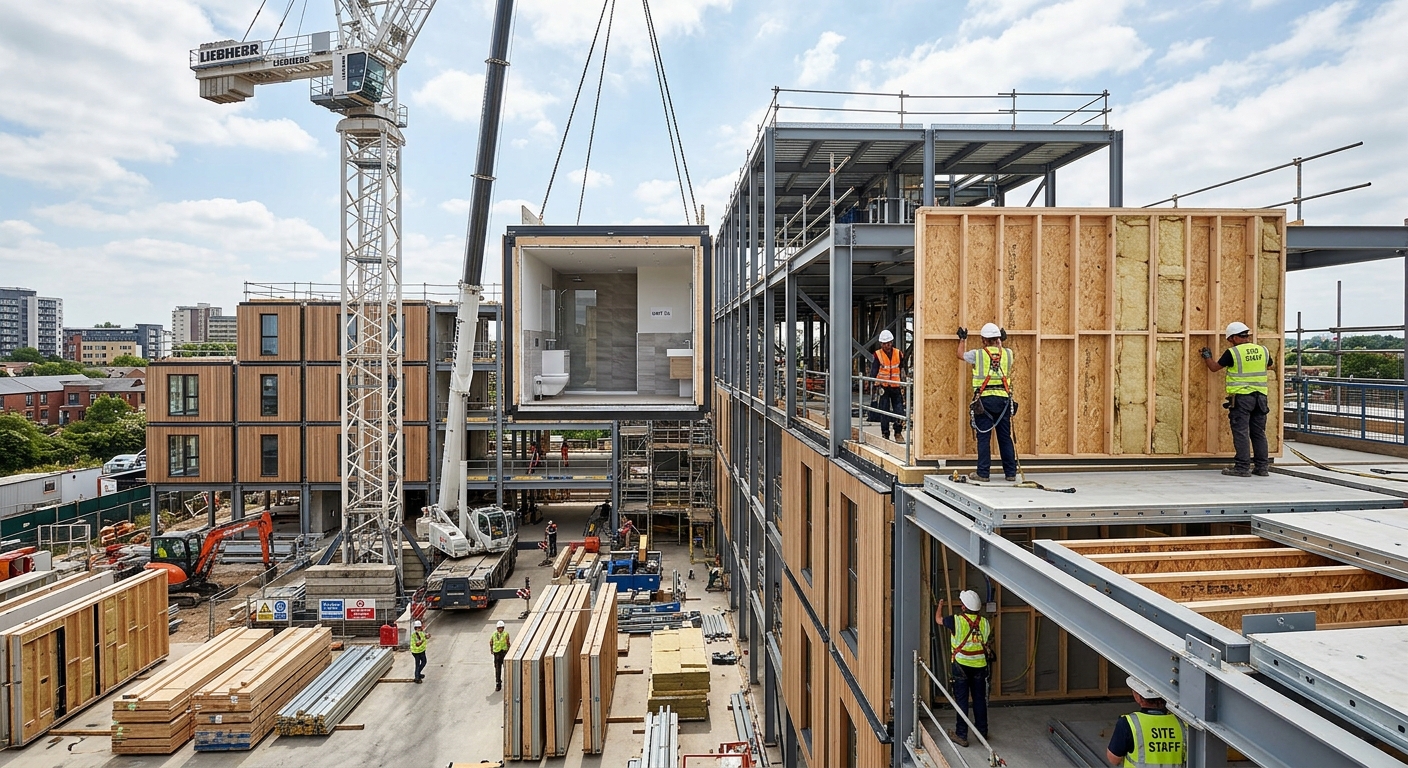
A combination of both. Volumetric modules handle the high-service, repeatable areas; bathrooms, kitchens, plant rooms. Panelised or traditional construction handles the rest.
Hybrid is often the most practical real-world solution. It lets each part of the project be delivered using the method best suited to it. Which balances programme efficiency with design flexibility. It does require tighter coordination, particularly at the interfaces where systems meet. That's where experience counts.
It's Not a New System
It's a Different Way of Thinking
Traditional construction figures things out as it goes.
Off-site construction builds it on paper first - then builds it on site.
Traditional construction is largely reactive. Decisions get made as the build unfolds: on site, in real time, by whoever is standing in front of the problem.
Off-site construction flips that sequence. Planning, design, and coordination are resolved before anything reaches site. Components are manufactured in controlled environments, where quality, sequencing, and efficiency are managed - not managed around.
The real shift is timing.
Decisions that would normally happen during construction are made earlier, during design and documentation. That reduces uncertainty on site... but it also demands more rigour upfront. Less room to adjust. More expectation of precision.
Need to Know More About Off-Site Construction?
Have a SIPs project in the pipeline?
We provide Design & Deliver packages for SIP panel projects across Australia: from conception through to delivery on site, and everything in between.
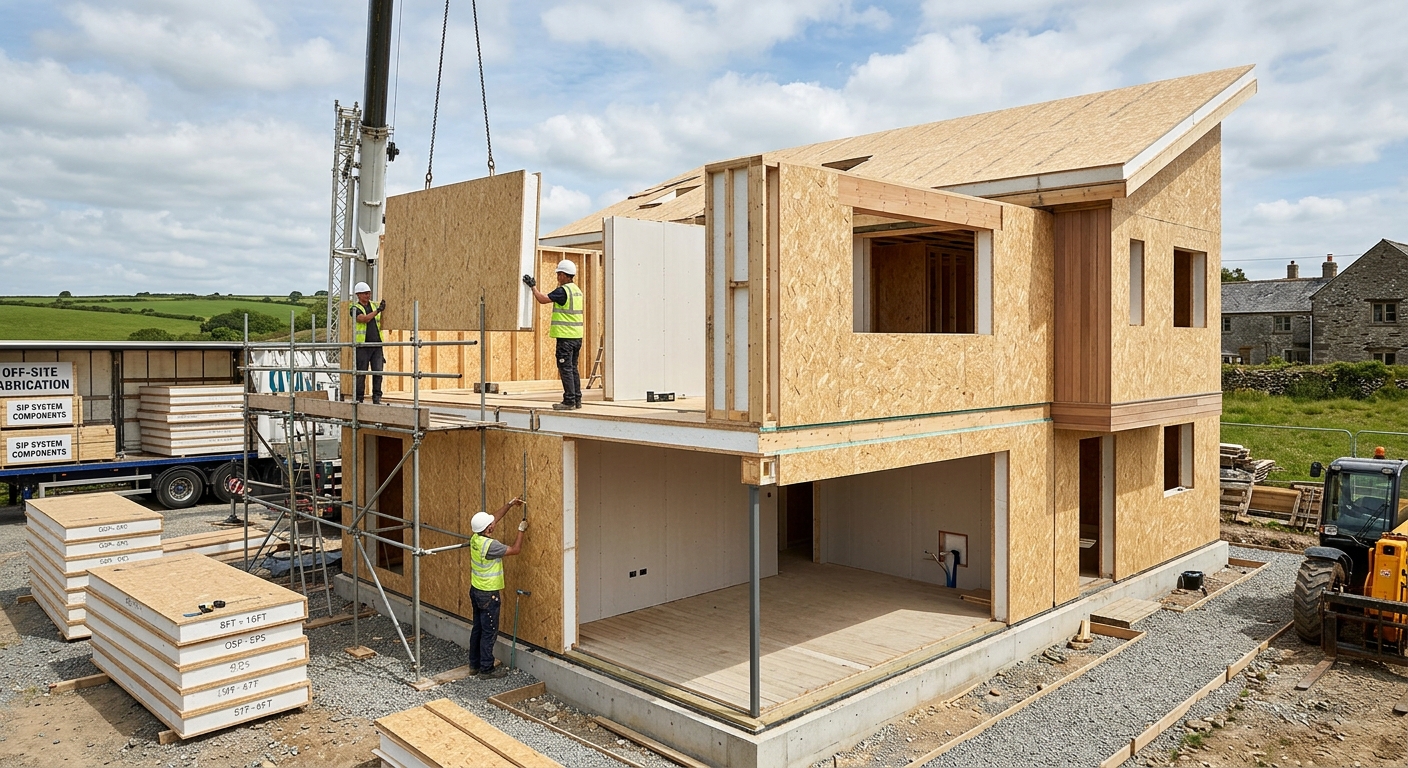
Structural Insulated Panels combine structure and insulation into a single prefabricated element. Two structural facings - typically OSB - bonded to a rigid insulation core. The result is a high-performance, insulated panel that acts as both the structural frame and the building envelope in one system.
In practice, SIPs are manufactured from project-specific documentation, then delivered to site as pre-cut wall, roof, and floor panels. Installation is fast. The shell is tight. And because the system is pre-engineered, it reduces site labour, material waste, and build time compared to traditional framing.
SIPs are gaining serious traction across Australian residential, modular, and architecturally driven projects, particularly where energy performance and build efficiency matter. The system aligns well with increasing NCC energy requirements, consistently achieving stronger thermal ratings through continuous insulation and reduced thermal bridging.
At its core, SIP construction is less about a product and more about a coordinated system. Performance, fit, and outcome are all directly tied to how well the building and coordination schedule is resolved before a panel leaves the factory.
Strategy & Feasibility
SIPS Integrated Design
Documentation, Engineering & Coordination
Procurement & Supplier Integration
Build Planning & Sequencing
Construction Support
Frequetly Asked Question
What does Off-site Logic actually do?
We work with builders, developers, and designers to apply off-site and alternative construction methods in a practical, coordinated way. That includes everything from early-stage strategy and feasibility through to full design documentation, supplier procurement, and construction support. We don't manufacture panels - we make sure the whole process is properly resolved so the right manufacturer can.
Is off-site construction right for my project?
Not every project suits off-site delivery, and we'll tell you that upfront. The right fit depends on your programme, design, site conditions, and budget. We offer early-stage strategy and feasibility assessments specifically to answer that question before any significant commitments are made.
Do you work with SIPs specifically, or other off-site systems too?
SIPs are a core part of what we do, but we work across the broader off-site landscape - including other panelised systems, hybrid delivery models, and mass timber. Our focus is always on finding the right system for the project, not fitting a project to a system we prefer.
What does a Design & Deliver package include?
Our Design & Deliver packages are end-to-end. We handle strategy, integrated design, full documentation and coordination, supplier procurement, build planning, sequencing, and ongoing construction support. The scope is tailored to each project - some clients need the full package, others engage us for specific stages.
How early should we get you involved?
As early as possible. Off-site construction is front-loaded by nature: the more resolved the design and documentation before fabrication begins, the better the outcome. Bringing us in at concept or design development stage gives us the most room to work with.
Stay Across What's Happening in Off-site Construction
Industry insights, practical guidance, and project thinking - delivered to your inbox. No noise, no filler. Just useful content for people building in Australia.